
The Importance of Sniff Walks for Dogs: More Than Just Exercise
When you take your dog for a walk, do they want to stop and smell every tree, bush, patch of grass, and fire hydrant along the way?
It can be tempting to hurry them along, especially when you are trying to get your steps in before returning to work. However, those sniff breaks are not wasted time. They are one of the most important and enjoyable parts of the walk for your dog.
A sniff walk allows your dog to explore the world through their strongest sense: smell. While regular walking provides important physical exercise, allowing time to sniff also provides mental stimulation, encourages natural behavior, and makes the walk more fulfilling.
At Sitter For Your Critters, we believe a successful dog walk is not measured only by how many blocks a dog covers. We tailor each walk to each dog, including plenty of safe opportunities to slow down, explore, and follow their nose.
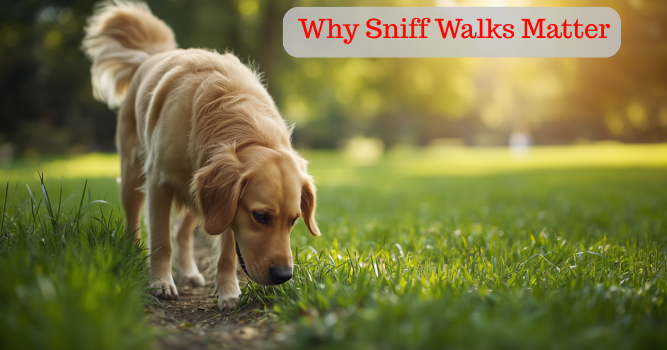
What Is a Sniff Walk?
A sniff walk is a relaxed walk during which your dog is allowed to stop and investigate interesting scents.
Instead of keeping a brisk pace for the entire outing, your dog gets time to smell grass, plants, trees, sidewalks, and other safe areas along the route. Your dog may cover less distance, but the walk can still be highly beneficial.
A sniff walk does not mean allowing your dog to pull wherever they want or the opportunity to investigate something unsafe. You remain attentive to your surroundings and guide the route while giving your dog appropriate choices about what they would like to smell.
Some walks may be primarily focused on physical exercise. Others may include a combination of walking, potty breaks, and sniffing. The right balance depends on your dog’s age, health, energy level, personality, and daily needs.
Why Is Sniffing So Important to Dogs?
Humans primarily experience the world through sight. Dogs, however, gather an enormous amount of information through scent.
When your dog stops to smell a tree or patch of grass, they are not simply enjoying an interesting odor. They may be gathering information about other animals, people, food, plants, and changes in the surrounding environment.
You might think of it as your dog checking the neighborhood news.
Even when you follow the same walking route every day, the scent information is constantly changing. Other dogs and animals have passed through, weather conditions have changed, plants may be blooming, and people may have brought new smells into the neighborhood.
Giving your dog time to investigate these changes makes an ordinary walk much more interesting.

Sniff Walks Provide Mental Stimulation
Physical exercise is important, but dogs also need opportunities to use their minds.
Sniffing requires dogs to gather, separate, and process scent information. That mental activity can make a relatively short walk feel much more satisfying than a hurried trip around the block.
This can be especially valuable for dogs who spend much of the day at home while their people are working. A midday sniff walk offers a change of scenery, a bathroom break, individual attention, and an opportunity to engage with the outside world.
Mental stimulation is also one reason professional dog walking can be so helpful for busy families. Learn about our dog walking services.
Sniffing Encourages Natural Dog Behavior
Dogs are naturally curious animals who enjoy exploring through scent, which is a normal and instinctive behavior for them.
Giving your dog safe opportunities to sniff allows them to behave like a dog rather than expecting them to walk beside you without ever stopping.
A structured walk still has value, particularly when crossing streets, passing distractions, or navigating busy areas. However, not every moment of every walk needs to be a formal exercise.
Allowing some appropriate freedom to explore can make walks more enjoyable and enriching.
Sniff Walks Can Help Prevent Boredom
Dogs who do not receive enough physical activity or mental stimulation may look for other ways to entertain themselves.
Depending on the dog, boredom may contribute to behaviors such as:
- Excessive barking
- Chewing household items
- Pacing or restlessness
- Digging
- Constantly seeking attention
- Getting into trash or other off-limit items
- Becoming overly excited when someone arrives home
These behaviors can have many possible causes, so a sniff walk is not a solution to every behavioral concern. However, adding appropriate enrichment and exercise to your dog’s routine may help them feel more satisfied.
For additional signs that your dog may need more activity, read 7 Signs Your Dog Needs More Exercise During the Day.
Sniff Walks Give Dogs Appropriate Choices
Dogs have relatively little control over their daily schedules. We decide when they eat, when they go outside, where they walk, and when playtime begins and ends.
During a safe sniff walk, your dog gets to make a few small choices. They may choose which tree they want to investigate or spend extra time smelling one section of grass.
You still control the route and protect your dog from hazards, but giving them reasonable choices can make the walk more engaging.
This does not mean following your dog into unsafe areas, allowing them to approach unfamiliar dogs, or letting them eat something from the ground. Safety should always come first.
Sniff Walks Are Helpful for Dogs With Different Exercise Needs
Not every dog needs or can safely handle an intense, fast-paced walk.
Sniff walks may be especially enjoyable for:
- Senior dogs who move at a slower pace
- Dogs recovering from an illness or injury, with veterinary approval
- Shy dogs who need time to become comfortable outside
- Dogs who are easily overstimulated
- Dogs who enjoy exploring more than covering long distances
- Dogs whose age, breed, or health affects their exercise needs
The walk should always be adjusted to the individual dog.
For help deciding how much activity your dog may need, read How Often Should You Walk Your Dog? A Complete Guide for Chico Dog Owners.
Sniffing Does Not Replace Physical Exercise
Although sniff walks offer important mental enrichment, most healthy dogs still need appropriate physical activity.
A complete walking routine may include both:
- Purposeful movement that helps your dog exercise.
- Slower periods when your dog can sniff and explore.
The balance will be different for every dog. A young, energetic dog may benefit from a longer walk with both brisk movement and sniffing breaks. A senior dog may prefer a shorter, slower outing with frequent opportunities to investigate scents.
Rather than judging a walk only by distance, consider how your dog behaves afterward. A successful walk should leave your dog comfortably satisfied without causing pain, exhaustion, overheating, or excessive stress.
How to Take Your Dog on a Safe Sniff Walk
Choose a Safe Route
Select an area with room to walk without being forced too close to traffic, loose dogs, crowded sidewalks, or other avoidable hazards.
A familiar neighborhood route can work perfectly. Your dog does not need to visit a new trail every day to discover interesting scents.
Use Secure Walking Equipment
Make sure your dog’s harness or collar fits properly and cannot easily slip off. At Sitter For Your Critters, we often prefer secure, properly fitted harnesses because safety is always our first concern.
Check your leash and hardware regularly for wear.
Watch the Ground Carefully
Do not allow your dog to investigate broken glass, discarded food, animal waste, mushrooms, chemicals, medications, or other potentially dangerous substances.
Sniffing is encouraged. Eating mystery objects from the ground is not.
Let Your Dog Set the Sniffing Pace
When it is safe, give your dog enough leash to comfortably lower their head and explore without constant tension.
You do not need to stop at every object for several minutes. A gentle cue can help you continue when necessary. The goal is to offer more time to investigate, not to give up all structure.
Pay Attention to the Weather
Chico’s summer temperatures can make normal dog walks unsafe.
When it’s hot outside, sniffing should not come at the expense of safety. Walk during cooler parts of the day, test pavement temperatures, carry water when appropriate, and watch closely for signs that your dog is getting too warm.
Read more about how we keep dogs safe during Chico’s hot summer days.
How Long Should a Sniff Walk Be?
There is no single perfect length.
A sniff walk might last 15 minutes for one dog and 45 minutes for another. What matters is whether the outing is appropriate for your dog’s health, age, energy level, and the weather.
At Sitter For Your Critters, we offer 30-minute, 45-minute, and 60-minute dog walks so care can be tailored to each dog’s needs.
One dog may need a steady walk with brief sniffing breaks. Another may benefit most from a relaxed outing that includes a potty break, gentle movement, and plenty of time to explore.
What If Your Dog Wants to Sniff Everything?
For many dogs, that is completely normal.
You can create a balance by using a cue such as “let’s go” when it is time to continue. You might also designate certain portions of the walk for relaxed sniffing and other portions for more consistent movement.
Be patient while your dog learns the routine. The goal is not to stop all sniffing. The goal is to help your dog understand when it is time to explore and when it is time to move along.
Give Your Dog Time to Stop and Smell the World
The next time your dog pauses to investigate an interesting scent, remember that they are doing more than delaying the walk.
They are gathering information, exercising their brain, engaging in a natural behavior, and experiencing the world in a way that is meaningful to them.
A good dog walk is not always the fastest walk or the one that covers the greatest distance. Sometimes, the best walk is the one that gives your dog the time and freedom to safely follow their nose.
Need help giving your dog more exercise, enrichment, and attention during the week?
How Our Chico Dog Walkers Make Walks More Meaningful
At Sitter For Your Critters, we do not believe every dog should receive the same type of walk.
Our professional dog walkers tailor each visit to the dog in front of us. We consider the dog’s personality, age, energy, comfort level, health, and instructions from their family.
Our walks may include:
- Physical exercise at an appropriate pace
- Sniffing and mental enrichment
- Potty breaks
- Fresh water
- Individual attention
- Indoor play when outdoor temperatures are unsafe
- A detailed report and photos after the visit
We walk dogs from the same household. We also avoid unfamiliar dogs and other potential hazards while walking.
You can learn more about the caring professionals who provide these visits on our Meet the Team page.
Explore our Chico dog walking services or contact Sitter For Your Critters to learn how we can tailor visits to your dog.